
Carbohydrates: the fuel of sport
Carbohydrate is not the enemy. It is the muscle's preferred substrate at high intensity. Cutting carbs indiscriminately hurts performance, recovery and long-term health.
No editorial date recorded
Read article Darwin Blog
Training, nutrition and recovery. Find your next read by what matters to you.

Featured
Sports nutritionCarbohydrate is not the enemy. It is the muscle's preferred substrate at high intensity. Cutting carbs indiscriminately hurts performance, recovery and long-term health.
6 min read96 reads to discover
96 of 96 articles
Editorial dates appear when recorded. Articles without a date stay in the archive and come last in date-based sorting.
Carbohydrate is not the enemy. It is the muscle's preferred substrate at high intensity. Cutting carbs indiscriminately hurts performance, recovery and long-term health.

The most important electrolyte for athletes is not potassium. It is sodium. Most athletes underestimate it until they feel a cramp at kilometer 35.

A glass of wine after the race seems harmless. Science tells a different story, and a more nuanced one than "alcohol is forbidden for athletes".

Sugar has become the villain since 2015, in the same way fat was the villain of the '80s. The truth, as always, lies in context.

1.6 g/kg or 2.2 g/kg? A 30-minute or 2-hour anabolic window? The scientific consensus has become clearer in the last 5 years.

You can have the perfect diet and periodized training, but if you sleep 5 hours, half of the adaptations stay on the table.

The supplement industry is an ocean of promises. A few products have solid evidence. Most do not. This is the honest list.

The muscle grows during rest, not during exercise. Ignoring recovery is the fastest way to regress, get injured and slide into overtraining.

The body is a precision machine. What you put into it matters. When you put it in matters almost as much. And when you put in more than the machine needs, it stores.

The carbon plate is not marketing. It has a real physical mechanism and peer-reviewed studies confirming running economy gains. But it is not for everyone in every workout.

Running looks simple. And every aspect has a physiological basis that separates those who finished the race from those who were forced to stop. Understanding the method is knowing why it works.

Music improves performance. That is scientific fact, not opinion. But headphones at the wrong moment can cost you. Learn when to use them, when to avoid them and how to get the most out of the combination of music and movement.

Between 25 and 45 percent of the weight lost with GLP-1 can be lean mass. The good news from recent evidence: the problem is almost never the drug, it is the deficit without stimulus.

In May 2026, a doped swimmer in a banned supersuit lowered the 50m freestyle record and took US$1 million. The promise is "safe doping with a doctor by your side". The evidence tells another story.

Zone 2 was sold as a magic pill for mitochondria and longevity. A 2025 review takes that story apart, and the real reason it works is far more mundane than the marketing promised.

Two threshold sessions on the same day skyrocketed the quality volume of the elite. We separate the established science from the origin folklore, and show what the amateur can steal without pricking their finger all day.

The cold plunge became a biohacker fever, but it clashes with strength training. The evidence converges: ice right after strength training slightly reduces hypertrophy. The detail almost nobody mentions is that timing and goal change everything.

Influencers turned soybean, sunflower and canola oil into inflammation villains. The human evidence tells a very different story, and the real problem is almost never the oil itself.

In 2024 it leaked that Tour de France teams were inhaling carbon monoxide. The teams say it is just a diagnostic exam. Critics point out that the same technique, repeated, mimics altitude and becomes doping. The science shows the difference lies in dose and frequency.

Before 2013, every climb above 6.10 W/kg estimated had a doped owner. After a decade of silence, Pogacar and Vingegaard crossed that line again. What the science says about a question physiology alone cannot answer.

The "no pain no gain" culture says go to total failure on every set. Recent strength research says stopping one to three repetitions short delivers nearly the same muscle, with less fatigue and less risk. See both sides and what the best evidence really shows.

Chronic traumatic encephalopathy was first described in boxers, almost a century ago. Today it shows up in the brains of athletes as young as 17, but the fight industry still downplays the risk and large-scale MMA studies are lacking. We separate what the best evidence supports from what is still hypothesis.

CrossFit has a mascot that treats rhabdomyolysis as a joke, and critics say this normalizes a medical emergency. We separate the panic from the statistic: the condition is rare, but the warning sign is legitimate.

The idea that running "wrecks your knees" became common sense. But when science pooled more than 100 thousand people into a single analysis, the number that appeared defied almost everyone's intuition.

The shoe with a carbon plate and high-rebound foam reignited sport's oldest question: how far can equipment go before it becomes cheating? Science has already measured the benefit. The honest debate is not about individual fraud, it is about comparing records across eras.

EPO is the ultimate symbol of doping in cycling, yet a randomized placebo-controlled trial found no time difference on a climb up Mont Ventoux. The science here is subtler, and more interesting, than the headline suggests.

A neighborhood-by-neighborhood map of real, operating places in Porto Alegre where you can eat grilled protein, salad, poke and bowls without giving up meeting friends. All addresses were confirmed, but menus and hours change, so check before you go.

Poke, grilled fish, bowls and açaí in real Floripa places that combine quality food with a good get-together. A region-by-region guide, with what to order and why each address works for gathering the crew after training.

You can socialize without sabotaging recovery. This is an honest guide: what the science says about alcohol, training and sleep, which drinks have the lowest impact and which alcohol-free options are worth it, with real calorie and sugar numbers.

Not every beer weighs the same on the body of someone who trains. Evidence indicates that alcohol content, calories and ingredients change the impact a lot, and that the 0.0% version has its own chapter in the science of recovery.

The free meal became a ritual for those on a diet, but science separates two very different things: the uncontrolled cheat day and the structured refeed. Evidence indicates the second can help adherence and soften metabolic adaptation, while the first usually costs dearly. See the real studies.

Running is one of the most natural and best studied movements of the human body. Understanding the physiology behind it, what the evidence shows about health and how to take the first steps with method turns an intimidating activity into a sustainable habit for life.

Strength training does not just build muscle. Science shows that the force you produce on the bar predicts how long and how well you live. Understand progressive overload, the difference between strength and hypertrophy and how to structure your training based on evidence.

Few activities recruit the body as much as swimming, and almost none do it while sparing the joints like it. Understand how technique works in the water, the four strokes and why science considers swimming one of the most accessible exercises to last a lifetime.

Cycling is one of the most efficient ways to build an aerobic base with low joint impact. Understand road versus indoor, what watts, FTP and W/kg mean, and how to structure training by zones without relying on guesswork.

Triathlon chains swimming, cycling and running into a single timed race, with no pause between sports. Understand the distances, the transitions, brick training and how evidence suggests organizing load across three sports.

An honest overview of three entry doors into combat. What each sport demands from the body, what science shows about conditioning and health, and how to start safely and with a clear head.

CrossFit is a constantly varied, high intensity conditioning method built on functional movements. Understand what WODs are, the benchmarks, load scaling and how to start with technique and safety.

Eight kilometers of running interspersed with eight functional stations, always in the same order, in any city in the world. Understand the format that went from 650 athletes in 2018 to hundreds of thousands of participants, why it exploded and how to train the specificity.

Functional training is training organized around movement patterns the body uses outside the gym, like squatting, getting up off the floor, carrying weight and rotating the trunk, instead of isolating one muscle at a time. See what science confirms, who it serves, the difference from traditional strength training and how to build a week with progression.

The question that separates those who run a lot from those who run well is almost never "how much to train", but "at what intensity". Three models compete for the answer. See what science shows about each and how the amateur applies them without becoming a guinea pig.

The Maffetone method proposes building the entire aerobic base by running slowly, with heart rate capped by the formula 180 minus age. The idea is seductive and has famous cases behind it, but what does science really support and where does the formula fail?

Methods like Pose and Chi running promise a perfect stride. Biomechanics tells a more sober story: some details change a lot, others almost nothing. See what the evidence really points to about cadence, foot strike and overstriding.

Long run, continuous, fartlek, tempo, intervals and sprints are not the same thing with different names. Each targets a specific physiological adaptation. Understand the goal of each workout and how to combine them in the week based on evidence.

How a marathon cycle is organized into phases, why volume rises and then pulls back, and what science shows about race pace training and the pre-race rest week.

Adapting the body to burn more fat looks like the perfect formula for endurance, but the evidence tells a more nuanced story. Understand what the Burke and Volek studies show about economy, power and for whom the strategy may make sense.

The 16/8 became a fever among those who train hard. Evidence shows you can lose fat and keep strength and muscle with a reduced eating window, but the result depends on sufficient protein, smart timing and real adherence. See what the studies point to and where the cautions lie.

The flexible diet swaps the list of forbidden foods for protein, carbohydrate and fat targets. Evidence suggests this approach delivers results similar to rigid diets, with an important bonus: it is usually easier to sustain. Understand how it works, what science shows and where the limits are.

Vegetarians and vegans have won Grand Slams, ultramarathons and strength records. Science shows you can perform without meat, as long as the diet is well planned and a few nutrients get special attention.

Of all dietary philosophies, the Mediterranean diet has the most solid scientific base. A single clinical trial with more than 7 thousand people helps explain why it became a reference for cardiovascular health and a starting point for those who train.

Cramps, gas and that run interrupted by the urge to find a bathroom. For many endurance athletes, the opponent is not in the legs, it is in the gut. The low-FODMAP approach became an object of study precisely there, and the evidence already gives clues about what it can and cannot do.

The thermometer is not a detail of the plan, it is part of the plan. See what science shows about training and eating in heat and cold, with real numbers on acclimatization, sweat and replacement.

Less oxygen in the air forces the body to make more red blood cells. That is the basis of altitude training. But science shows the benefit depends on where you sleep, where you train and how long you stay up there.

Browse major Brazilian road races by month and city. See confirmed 2026 dates and the usual month in 2027; check the event and entry on its official site before planning travel.

Everything above 42.195 km enters ultra territory. From the 50k to the 100 miles, and mountain trail with heavy elevation gain, the body faces problems the marathon never presents: a shut-down stomach, sleep, destroyed feet and muscle damage that becomes the true limiter. See what changes, how to train and which races to know in Brazil and around the world.

The seven Abbott World Marathon Majors gather the most coveted marathons on the planet. This guide compares month and typical weather, course difficulty, approximate registration cost and the real entry routes for each, with the caveat that values and rules change every year.

Carbon plate supershoes became an arms race among brands. We gathered what has already reached stores in 2025 and 2026, with foam, plate, weight and drop verified one by one, and separated what is still expectation for the 2026 to 2027 cycle. No invented models or dates.

There is no single shoe that does everything. The right model depends on the type of training you do that day and on your body's characteristics. This guide organizes the most used running shoes by purpose, with real models and what to look for in each category.

The shoe choice changes with the race. Surface, distance and target pace weigh more than the brand. See what the data says about the TTT, the Summer 25K and what to evaluate before deciding.

In December 2025, the London Hyrox gathered more than 40 thousand athletes at the ExCeL and became the biggest edition in the sport's history. Behind the number, a standardized format and a community growing at a pace rare in sport.

The six-pack does not appear because you did more crunches. It appears when body fat percentage drops enough for the muscle to become visible. Understand what evidence really points to about definition, the spot reduction myth and why living at a very low percentage year-round charges a price.

The idea of periodizing training by cycle phases became fashionable. The evidence, though, is humbler than the apps sell: the average effect of phase on performance is trivial, but variation from one person to another is enormous. Translating: it may matter to you, or it may not. Here is what the studies show, without hype.

In the menopause transition, the drop in estrogen accelerates bone and muscle loss. The good news is that strength and impact training become first-line tools. See what science shows, with honesty and without promising miracles.

The old female athlete triad became RED-S. When food does not cover training, the body cuts functions it deems optional: the menstrual cycle, bone, immunity and performance. Understand the warning signs and why what the elite does is not for everyone.

The word joins hungry and angry, but the phenomenon is real and has a name in science. Understand how the drop in glucose messes with the brain, why context decides whether hunger turns into anger, and what to do so you do not take it out on the first person who appears.

Setting goals, talking to yourself, visualizing, regulating anxiety and finding focus are skills science shows are trainable. See what really works, what is exaggeration and when to look for a sport psychologist.

The watch on your wrist measures some things accurately and merely estimates others. Knowing the difference separates those who use data as a compass from those who become hostage to a green number on the screen.

The Olympic champion's protocol was designed for a rare body, with an entire team behind it and full-time recovery. Copying the dose, not the principle, is the fastest recipe for getting hurt.

That pain that hits one or two days after a new workout has a name, an expiration date and almost nothing to do with lactic acid. See what evidence shows really helps, what is only folklore and how to tell normal soreness from injury.

From middle age on, the body loses strength, power and aerobic capacity at a measurable rate. The good news from science is that almost all of that decline is attenuated in those who keep training. See what actually changes, what can be maintained for decades, and why strength becomes the priority.

Runner's knee, shin splints, plantar fasciitis, iliotibial band and Achilles account for most of the pains that keep a runner off the road. The good news from science: the dominant cause is not the shoe or your foot strike, it is a load error. And load is the only thing on that list you control.

GLP-1 pens have left the diabetes office for the vocabulary of anyone who wants to lose weight. They are prescription-only medications, with real indications, risks and contraindications. This is an honest overview of what the science shows, and of where our scope ends.

For most pregnant women without contraindications, keeping the body moving is not only safe, it also brings real benefits. But pregnancy is a medical and individual matter: the one who clears, adjusts and follows up is your obstetrician. See what ACOG and the WHO say, what changes by trimester, and the signs that it is time to stop.

A woman is not a smaller man. There are real physiological differences between the sexes, but they concern body composition and metabolism, not the capacity to adapt to training. Understanding these differences helps you train better and eat enough. Nothing here is medical prescription.

The woman who trains has nutritional demands of her own. Iron, calcium, vitamin D, available energy and protein deserve special attention. See what the science shows, without prescribing, so you can talk with a professional.

What decides the cost-benefit of a whey is not the price of the tub, it is how much you pay per gram of protein. We went to the official websites of nine manufacturers, calculated the real number and crossed it with the fraud scandal that shook the industry in 2024.

Compare calories for 50 beers and carbohydrates for 41 on the same 100 ml serving. Filter brands and check each label source before drawing conclusions.

The myth that coffee cuts protein and hurts muscle gain does not survive the scientific evidence: caffeine does not interfere with amino acid absorption or protein synthesis, and it even helps you train better. The real confusion is about iron, not protein.

The urge for sweets has a physiological explanation, it is not fussiness or lack of willpower. Poor sleep, blood sugar swings, stress and even banning a food entirely increase the craving, while protein, fiber and a few smart swaps help control it without extremism.

Forget the generic villain or ally debate: this is about what the molecule does in the liver, the pancreas, the mouth and even the brain when chronic free sugar intake exceeds what the body handles well, organ by organ, with the evidence supporting each claim.

Strength and hypertrophy respond to the same central principle, progressive overload, but they call for different programming. See how to structure the week, how much to rest between sets, how to log the load session by session, and why strength training also improves running.

A running training plan organizes weeks of volume, intensity and rest to take someone who has never run from zero to 5 km or 10 km safely. See how to read the columns of a training plan, the logic behind the progression, why walking is part of the training, and the signs that it is time to stop.
Cooked white rice has 128 kcal per 100 g, brown rice 124, carioca beans 76 and the Prata banana 98, all according to TACO: see the comparative nutrition table of the 191 foods cataloged in Darwin, organized by group (cereals, legumes, meats, fish, dairy, eggs, fruits, vegetables, oils, beverages, sweets, nuts, processed foods, ready meals and seasonings), with source and no health promise the number cannot support.
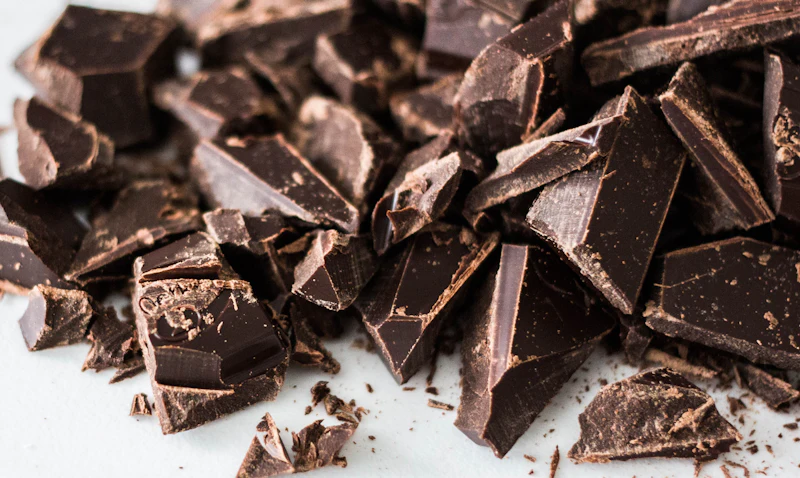
Comparing 27 chocolates, 22 domestic and 5 imported, on the same 100 g yardstick with official manufacturer data, the cocoa percentage declared on the label ranges from 36% to 85%, and almost half of the products do not carry that number.

Comparing 35 breeds on official AKC data (size, barking, coat, sociability), 26 come in as distance runners, 3 are sprint specialists and 6 are left out of running because of brachycephaly or anatomy, among them half of the breeds that the AKC itself recommends for apartments.

You cannot choose where you lose weight, and crunches do not shrink your belly. What reduces visceral fat is a set of ordinary things done for months, and there are studies showing that waist trainers, detox teas and fat burners are not among them.

A filterable comparator with 34 soft drinks on the 100 ml yardstick, with the source of every number, plus the ANVISA rules that let a correct label give the wrong impression.

A filterable comparator with 29 juices on the 100 ml ruler, with the source of every number, plus the rules that define how much fruit each category actually needs to contain.

A filterable comparator with 74 wines from Brazil, Chile and Argentina, with the residual sugar and alcohol content of each one from the producer's technical sheet, plus the calorie calculated from the two.

We checked list price, sale price and Pix price for 36 models at 14 stores on October 2, 2026, from nike.com.br to Amazon. The short answer: a decent training shoe costs from R$ 399,99 (Nike Revolution 8) to R$ 1.099,99 (Pegasus 42 at list price), with a real deal like the Olympikus Corre 4 at R$ 449,99. A tempo shoe lands between R$ 699,99 (Corre Turbo) and R$ 1.499,99 (Deviate Nitro 4). And a race-day super shoe runs from R$ 999,99 (men's Fila Racer Carbon 3) to R$ 2.399,99 (Vaporfly 4 Kipchoge edition). Below, every price we saw, where to buy with link, and when the discount usually shows up.

In Belo Horizonte, eating healthy without giving up the crew runs from the pay-by-weight buffet at Naturalmente, in Centro (a house open since 1989), to the juices at Néctar da Serra and the poke bowls in Savassi, with Balance covering the West region. There are 12 addresses organized by region, with what to order at each one and why it works for those who train.

Healthy food in Brasília lives in the commercial quadras of the Asas: natural pay-by-weight buffets since 1996, pokes built from scratch, vegetarian cooking with its own garden and a recovery café in Lago Sul. This guide organizes the addresses by region, with what to order at each one and why each place works for those who train and for gathering the crew after the workout.

From a fixed-price vegan buffet in São Francisco to poke in Batel and a 24h bakery with natural fermentation in Bacacheri, Curitiba solves the meal of whoever trains in any region of the city. This guide organizes twelve real addresses by neighborhood, with what to order at each one and why each table works for the post-workout and for bringing the crew along.

From fruit juice squeezed on the spot in Ipanema to the award-winning vegetarian bistro of Barra, Rio has healthy cooking to spare for those who train. This guide gathers real places by region, with what to order at each one and why each address works for sitting down with the crew after training.

In São Paulo you can eat healthy in any corner of the city, from salad treated as a main course in the Jardins to the poke of Avenida Iraí, on the way of whoever trains at Ibirapuera. This guide gathers real addresses by region, with what to order at each one and why each table works for those who train and for bringing the crew, from the Paulista axis to Tatuapé and Santana.

Periodizing is not a choice between linear and undulating, it is organizing goal, calendar, progression, and recovery into blocks of weeks that fit together. This guide walks through the decision chain from goal to mesocycle, what the comparative evidence actually says, and the costliest mistakes of building a plan without periodizing.
No articles found. Try another word or clear the filters.
Archive photographs: Unsplash. Image license.
We use cookies to understand how you use Darwin and, if you accept, to show more relevant ads on other platforms. You can reject them without losing access to the site. Learn more.